
Happy Valentine’s Day, my loves! Let’s talk about gay sex.
Okay, not just gay sex. Specifically, let’s talk about the moment that queer sex and queer romance is having right now — not just in the fandom spaces where it’s always thrived, but all over mainstream media, news outlets, and just about everywhere else. From Heated Rivalry to Bridgerton (yes, Benedict’s romance is still queer by virtue of him being queer, shut up), smut is flouncing out of the shadows and into the light. And honestly? Good for her.

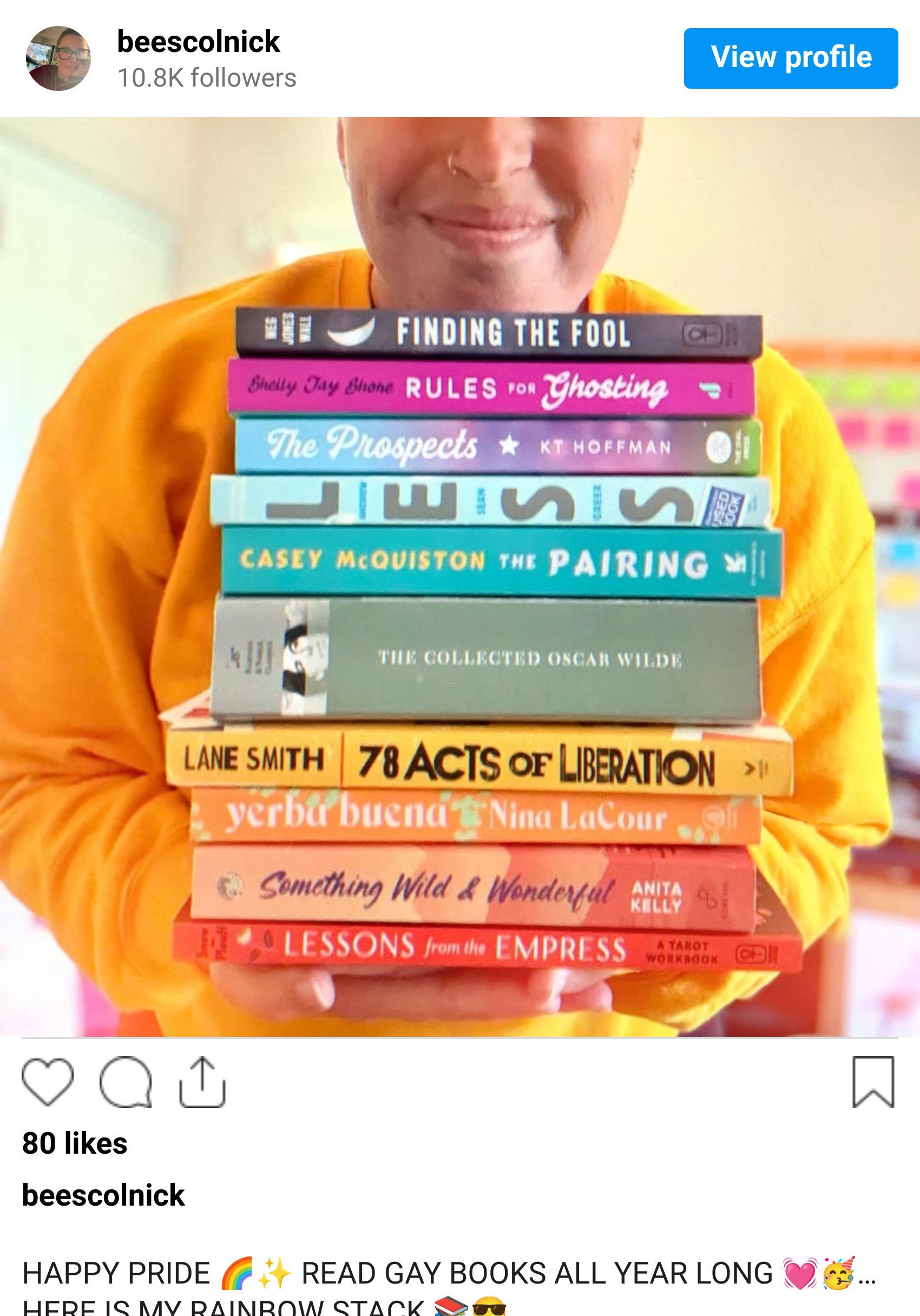
I got really into romance novels last year, after essentially deciding that the world is kind of enough of a bummer without me pouring all my energy into reading books that will make me even more depressed. This led to a number of breakthroughs, from shaking off enough of my internalized misogyny that I could finally admit that yes, Rules for Ghosting is a romance novel, and yes, Love Me Like a Rock Song definitely is, too.
(I’m going to rebrand myself as the Casey McQuiston of weird Jewish paranormal romance. Mostly so that I can keep selling manuscripts that are over 110,000 words. I regret nothing.)
Everyone has an opinion about what makes romance as a genre so attractive right now, and what it is that made Heated Rivalry, of all the various romance properties out there, become such a breakout sensation.
I’m not particularly interested in weighing in on that, but what I am interested in is what it’s been like (for better or worse) to have something shamelessly smutty — and, more importantly, shamelessly queer and smutty, because you just don’t see most directors of mainstream programming hopping online to talk about how important it was for one main character to eat the other out the first time they had penetrative sex rather than waiting for almost a decade to go down like they do in the books — be the show that’s taken over everyone’s newsfeeds to the degree it has. I may not have been in the romance fandom for long, but I have been in fandom fandom for [redacted] years, and for the vast majority of that time, we kept that shit locked! down! Tumblr (or, back in the day, LiveJournal) and AO3 usernames were guarded more closely than Fort Knox. Giving your AO3 handle to a real-life friend was like, eighth base, because those bookmarks exposed kinks that are usually between you and the divine entity of your choice.

We’re still not necessarily broadcasting our AO3 history (and, honestly, thank god), but people are being open about how much they love Heated Rivalry, in all its queer, sexy goodness, with a public shamelessness I don’t think I’ve ever seen before. This isn’t the “ha, ha, look at those sad housewives with their Twilight fanfiction BSDM novel” of the Fifty Shades of Grey or the “don’t talk to me while I’m reading my faerie smut” content all over Bookstagram and BookTok. It’s a cheerful, public delight that’s everywhere from the Golden Globes to [checks notes] New York City mayoral press conferences. And you know what? We need that right now.

In a recent newsletter, Heather Hogan wrote about exactly why we’re all eating Heated Rivalry up with a spoon: Because romance is great, actually, and we should stop pretending it isn’t. She writes,
You and everyone you know love Heated Rivalry for the same reason my wife and I felt okay goofing off during the show’s most tense moment: Because romance novels tell good fucking stories, the kind we wrap around ourselves on our coldest nights, the kind we tell ourselves again and again to find ways to keep going.
Stories about love are powerful because they remind us that love is worth fighting for. And while sex is certainly not a requirement for love or romance, the on-screen sexual energy of shows like Heated Rivalry are just as important as the sweeter and more chaste shows like Heartstopper. We all deserve to go a little feral about sexy shit going mainstream, actually! We deserve to dissect the cinematography of a great sex scene just as deeply as we’d analyze a poem! And we deserve to do that loudly and proudly and in community and with absolutely no shame.
All this to say: In honor of Valentine’s Day, I’m delighted to finally share a Creativity Q+A with my friend and teacher and source of immense feral delight, Bee Scolnick. Bee is a self-described “writer, witch, and weirdo” who, among her many other offerings, hosts a monthly “Smut Club” gathering for folks to hang out on Zoom while writing, reading, drawing, or otherwise engaging with smutty content, from romance novels to fanfiction to fanart and everything in between. We talked about creating joyful community spaces, leaning into being absolutely unhinged, and finding authentic connection in late-stage capitalism. Enjoy!

creativity q+a with bee scolnick
So, let’s start simple: Tell me a little bit about what creativity means to you.
This is gonna sound so cheesy, but creativity is life for me. I truly don't know who I would be without creativity, and I don't know how I would even get through a single day of life experience on this planet earth without creativity.
Like, I see myself as a maker. I'm constantly making things, whether it’s something just for me and my eyes only, or something in the kitchen, or part of my larger spiritual practice or witchcraft, or something somebody else will read one day. I just truly don't know what I would do in life if I wasn't making something. And that has really allowed my creative life to be this fully flourishing ecosystem of things that don't always go together, but sometimes do. So my creative journey really has just been a lifetime of throwing myself into projects and opportunities and situations that I want to be in and that fuel my creative fire.
I love the idea of a creative ecosystem, because I know that there are some people who think, “well, I do this thing and I do this thing, but they don’t necessarily talk to each other or inform each other.” And ecosystems as we know are interconnected and interdependent, and they flourish because of the way they all fit together. So what does it mean to have a creative ecosystem?
I think ecosystem is also the correct word because from the surface, the pieces of an ecosystem might not visibly be speaking to one another, but the roots — literal or not — are connected. So in my creative ecosystem, everything's coming from me, you know? So if I’m like the root system or the mycelial network, then on the surface, maybe one project isn't speaking to another, but the roots are still connected. And I mean, with the different parts of my work, I refer to myself as a writer, witch and weirdo, very publicly —
Oh. I love that. Put that on your business card immediately.
Right? Business cards totally incoming.
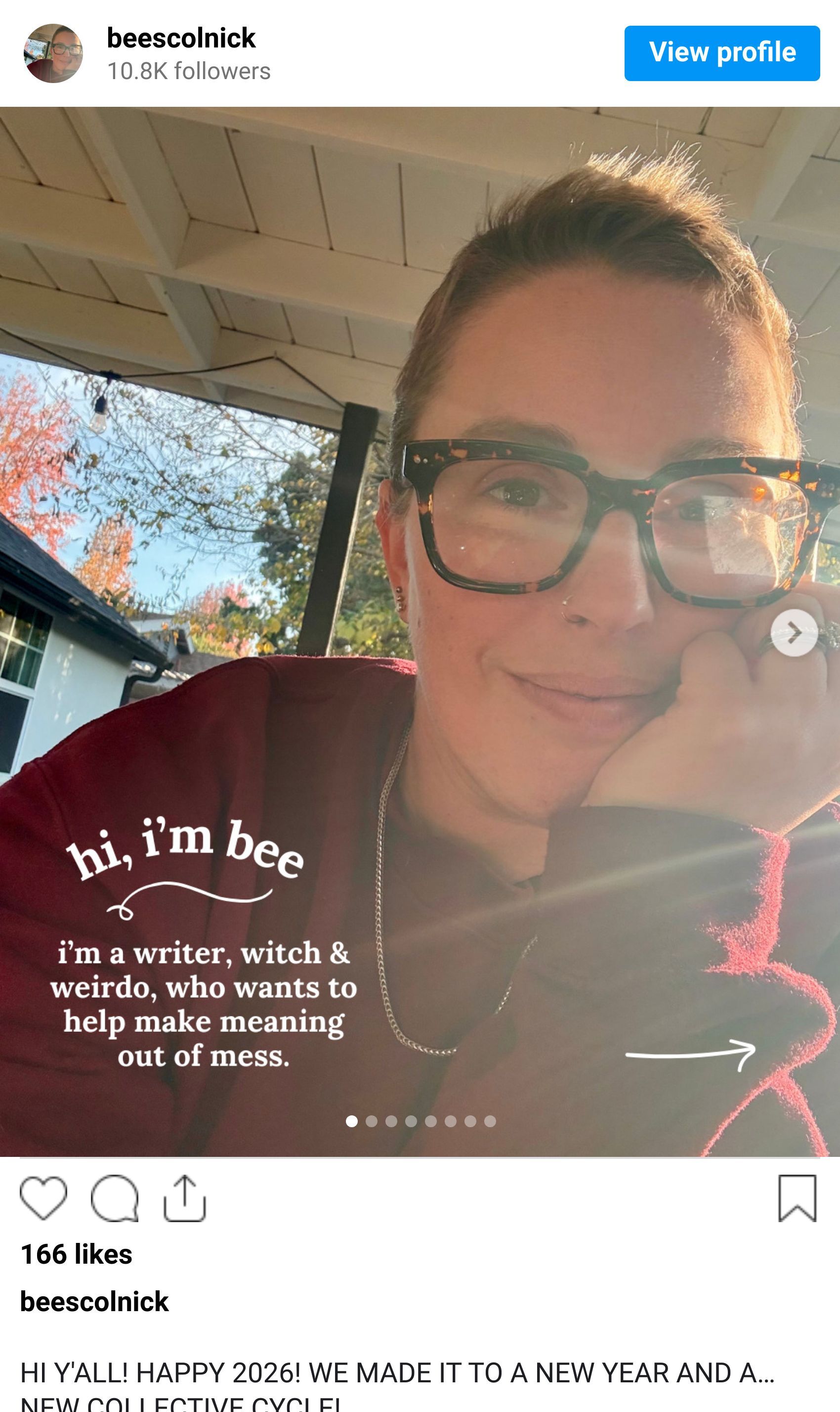
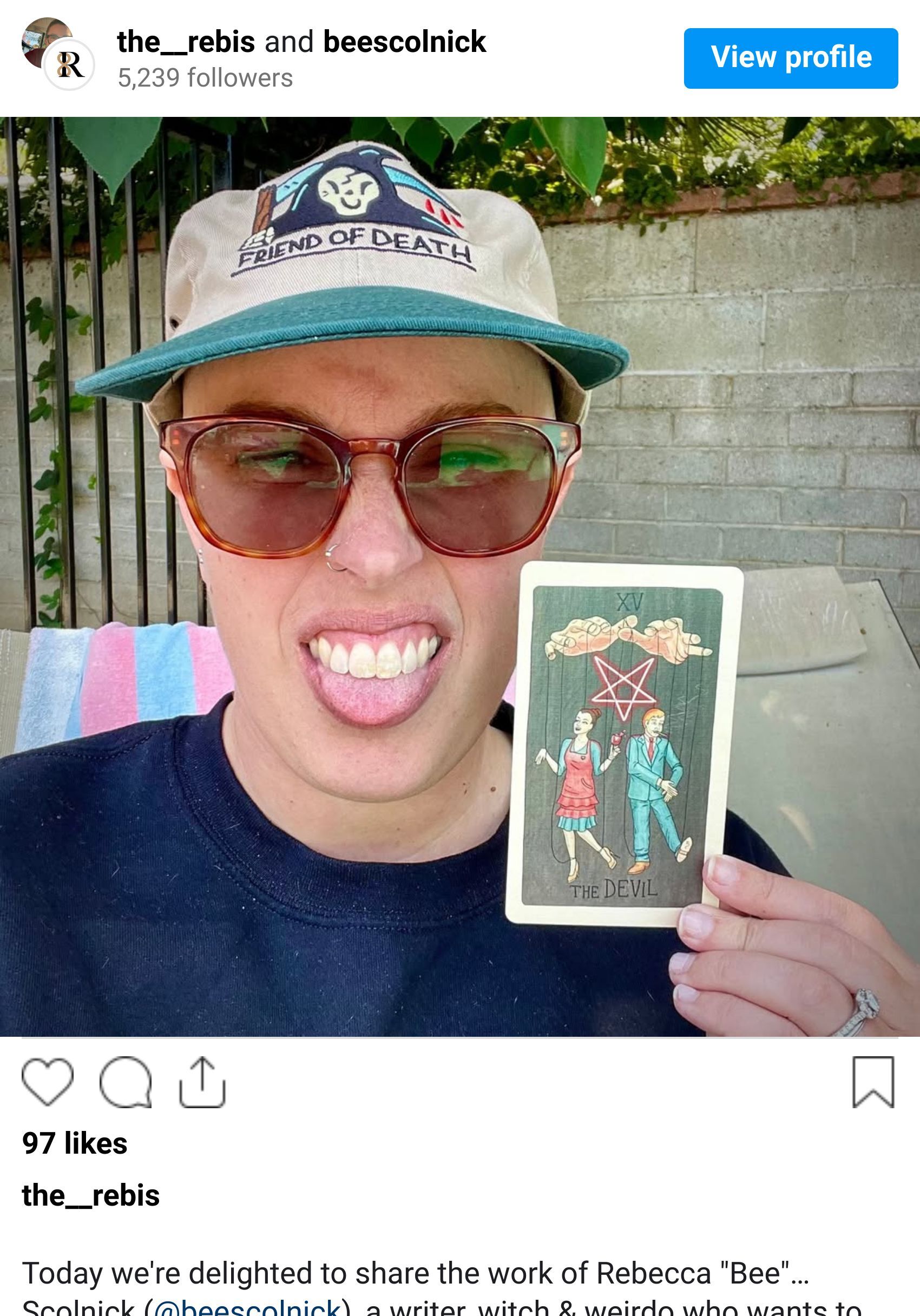
But like, I refer to myself as that very publicly because I need something that is larger than just one word or just a couple of words, and those are the three words that work as an umbrella for my work. In my writing work, I am a published author. I have published multiple nonfiction works in the numerology and witchcraft space. My first book The Witch’s Book of Numbers, which I authored all on my own, is about the intersection of numerology and witchcraft. And then I also wrote a smaller book on numerology and wedding planning, which is very niche. And then I have gotten to be a part of a lot of collaborative books like Tarot in Other Words, which was edited by Cassandra Snow, and The Rebis, which I know we share. And I’m also hoping to be a published fiction author in my near future (please, universe!). But yes, I'm working on fiction projects.
But I also have this whole career as an actor, as a producer, as a writer and creator of content in the film, television, digital media space. I had a decade-long career as a video producer and editor, and I have all skills that are professional skills that can go into that. I helped run video at W Magazine for a while. My last freelance gig before the pandemic was at Nickelodeon, writing and producing promotional content for animated shows. I ran the video department at TodayTix, and did the Tonys for Broadway for a few years. So it's really an ecosystem that, again, has allowed me to just say “yes” to stuff.
And then the thing that we haven't talked about is definitely under the “weirdo” category, which is my smut club. I run a monthly donation-based club for folks to come read, write and otherwise create smutty or spicy content in creative community because my creative life and my creative ecosystem absolutely includes what you don't and cannot monetize, which is fic writing and fandom creation and fan art creation and writing in community with people who are like…feral online. So I wanted to bring that into my more public life because I do like to shine a light on that, which we think is weird and taboo. So I was like, why not? And the response has been amazing. It's one of my favorite places on the Internet.
I agree. It’s like the only thing that I’m willing to stay up past 8pm for.
I mean, I think smut is like…a lifestyle, you know? It’s like a state of mind.
It's absolutely a state of mind. I dream about an essay anthology of queer writers on the craft like, what it means to write queer smut in genre. And I told my agent that and she was like, “bitch, good luck.” So maybe I'll self-publish it and all of the money goes to sex worker bail funds.
Please do that.
Let's talk a little bit more about communities, because you’re balancing the Smut Club community, the Swimming in the Soup community for your newsletter…you do a lot of community work.
So how does that fit in not just with the way you think about creative practice, but also the things that you care about, and the people you care about, and the impact that you want to make?
I have always been pretty community-oriented as a person. If I didn't have a community, I was yearning for a community. It’s always just been inherently important and valuable to me to be a part of a group. And I also grew up doing theater, and I think when you grow up doing theater, you understand the magic and the joy of a group of people coming together to make something together. It becomes so much larger than just the thing that you're making. It's like, these are your people, and there's a commonality and a shared language and you understand one another. It creates this cool intersection of effort and art, you know, art-making and community-building. That's always been very important to me as an experience. I had big groups of friends who were very artistic and always making things, and so community and creativity have just always been linked for me.
I've tried to put myself in positions where I'm joining something, or if I can't join something, then I'm saying, “hey, we could make this thing!” And, and admittedly, there's a lot less legwork when you're joining something, you know, that's already happening, but what I found in the past five plus years of pandemic life, as everything has really been shoved online, that all of a sudden I was in a position of leading or facilitating spaces where digital community, but also digital art making, was happening.
For me, it literally started with a theater project I was involved in, in 2020, going, okay, well, we can't do this in person anymore, so let’s plop online. What does this do for the project? And from there, my own spaces kind of started to coalesce. I had this newsletter project, and I was like, “well, there's a readership here, but I'm not really speaking to them, like I want to speak to them.” So then the question was, “Where do my friends hang out? Discord? Great, okay, let's get on Discord.” And there was some trend to that, it has become trendy to have a Discord space, of course. But that was really kind of like, once I found Discord, I stopped liking Instagram, because I was like, “oh, this is where all the weird, cool queers are hanging out.”
I love the idea that, like, once you find Discord, you don't want to be on Instagram anymore. Like yes, I too love talking to people and not getting ads!
I think the one thing that I will add, too, is that I deeply value what a diversity of voices brings to a space. Like, I always want to be very clear, even in the spaces where I'm facilitating, that I’m a weirdo alongside everyone else. But it’s definitely inherent in me to be bringing people together as well as making things myself.
How do you feel like the different things that you create are like an expression of what you value?
With my numerology work, it's really interesting how the spiritual has really, for me, become intrinsic with the personal and the political, like you cannot separate those things for me. And so my numerology work and my tarot and my spiritual writing really comes from a fifteen-year personal journey on my own to get to where I am and then just a sharing of that knowledge.
But like, my book is so full of politics. It's so full of relationships. It's so full of queer community and queer personhood and saying this information is for everyone and everyone can use it to know themselves, to empower themselves to be better people out in the world. And then they can go out and be a better person to the people and animals and plants and everything that inhabit this place. So that's where I come to with my fiction writing, in wanting to write books about queer joy and queer romance and a world that lives kind of side by side with the world that we live in — one that’s not rooted in oppression, but is rooted in reality. And that’s a very fine line.
So I think for me personally, there's no separation for any of those things, my values and what I create and what I bring forth into the world and what I invite others to experience. It's like, why? How could I not bring my values into my work? My values are who I am.
Wow, that's the gayest thing I've ever said.
Well, speaking of the gayest things we've ever said, I feel like the spaces that you create are very joyful, especially in their inherent and intentional queerness. One of the things that I love about the Smut Club Discord is there's like so much delight that people take in just having this weird space where you don't have to come in and like do a disclaimer. Like, there's this kind of understanding that we're all weird here. We're all here to be free. Why is it so important to you to create these spaces and these works and these projects that have so much joy?
First of all, thank you. I love that reflection. That's so delightful to me to hear and definitely what I want to cultivate. So that's just so great.
I think it's really important to me that these spaces exist because these are the kinds of spaces that have actually personally changed my life. I think something that's beautiful about fandom is that it's another space where you are like, “Hey, by being here, I'm inherently a freak in some kind of way. And I'm gonna own that, whether that's just owning it for anonymous people online or whether that's owning that in like a larger way of what I've decided to become public with.”
But I think because of my personal experience of leaning into my freak side and leaning into my cringe and then being public about it, I’ve learned that there's such an intimacy available when people are just truly being their authentic feral selves, because you don't have to explain yourself. You don't have to do that disclaimer, like you said. And that freedom and that liberation is so meaningful.
In my Swimming in the Soup book club, we're reading Pleasure Activism by adrienne maree brown right now, and at the very beginning of the book is some commentary on Audre Lorde’s essay, “Uses of the Erotic.” And the core truth that I take away from that piece is that once you're in touch with that sense of self-satisfaction, whatever that means to you, then it becomes almost impossible not to start to reorient your life around that feeling because it's so addicting.
That's how I feel about being in space with other freaks. It's so addicting, and what makes it addicting is the freedom and the joy and the delight and the pleasure. And so it's amazing to me that that's what you experience when you're in my spaces because that feeling has truly changed my life. Like it, it just has. And I want that liberation for other people.
I mean, it's funny — my day job is like a lot of social media consulting, which I always say is ironic because I deeply don't love being on social media. But one of the things I talk to my clients about all the time is this need that people have for authenticity. AI is everywhere, and everything is hyper-produced and hyper-filtered. And what we're seeing is this idea that it’s cringey to care, but like, also please lean into your cringe and please do actually care so that I feel like there’s a human being here, you know?
That authentic caring is what actually makes people feel connected, and advertisers and Big Tech hate that.
Yeah. And I think we’ve also just become so overproduced in everyday life. It's far past inspiration culture, right? It's like…it's not attainable. It's not sustainable. And it's not reflective of who most of us are.
And so I do feel like, especially if you're someone who has always been in the counterculture, it's like this complete over mass production of the overculture. Even the people who have been in the overculture forever are starting to be blinded by it. And like, this isn't, this isn't me.
It’s interesting you should say that. The very first Creativity Q+A I did when I launched Creativity for Good was with a friend of mine from fandom spaces who helped organize a fandom event to raise money for kids in Gaza. It was like a fan art auction, and livestreaming artwork, and the entire thinking behind it was basically, “we’re gonna mobilize people in these cringy fandom spaces and raise a ton of money.”
And it gave people the space to be like, we can care about fandom and we can care about the real world and those two things can both exist publicly. These are the communities we're in. Why are we pretending we're not in these communities when actually we can really mobilize around the shit that we care about and be weird little freaks while we do it?
You’re also touching on something that is intrinsic to fandom spaces but that I hope is intrinsic in other spaces, which is that obsession piece — you know, meeting together in that sort of hyperfixation. It's like, obviously we are capable of caring about something to a degree that others might call unhealthy, but we can channel that into something powerful. Like, yes, sure, unbalanced, unhinged, but like, hello! Here we are! Who even wants to be hinged?
In this economy? We can't afford it. We literally can't afford it.
Literally cannot afford to be hinged.
There’s a lot of “that’s my emotional support hyperfixation, your honor.”
Yes. But you also touched on something else important, which is the privacy factor, you know? Like, I was kind of shoved out of the fandom closet.
This is so cool to the origins of Smut Club, but it's so cringy in my own life. So, okay, this is me leaning into the cringe. Sometime last year, I was asked to host a workshop for a small bookstore online about writing fanfiction, so I pitched a class on using fanfic to mend your relationship to your own creativity. Because you're playing in someone else's sandbox, it’s a much lower lift, right? It's something that you have, can engage with, can research, can get good at writing. It's a safe place to cut your teeth and learn your own voice and skill. And obviously, in order to market this class, I had to be public about my own fandom journey. And like, I never even came out as queer, but I feel like I came out as a fanfic writer.
And zero people signed up for this class, Shelly! They canceled it!
This must have been before we met, because I would have taken it. I'm so mad now.
It's okay. It probably wasn't the right time. Like there is a reason that it didn't happen. And now I run a very public smut club. So the Band-Aid has been ripped off, and I'm better for it, but everyone who thinks that things are easy for anyone, know that I came out about writing smut on the internet and then no one signed up for my class.
You didn't get canceled though. Only the class got cancelled.
True.
It is wild, though, because so much fanfiction is now being translated into traditionally published books, and so we’re seeing more and more discourse about that. There was all the drama around Romance Con last year, putting books that used to be Harry Potter fanfiction front and center.
And fandom has always had its issues, and we could do a whole other newsletter about toxic fandoms. But now we see all this discourse around like, “oh, we should like, like AO3 should have an algorithm?” Or, “why can’t we monetize fanfic?” And like…it’s okay for things to just be hobbies! It's okay for things to just be fun and bring you joy. They do not have to also bring you money.
I mean, amen to all of that. It's all so deeply bothersome. And I think that's another reason why when I started the idea of Smut Club, it was like…I would be doing this anyway, so I want other people to do it with me. How fun would that be? And then it was like, well, I am facilitating this space, and I am a writer who lives in late stage capitalism, so yes, some exchange should happen for the energy and the resources, sure. But I always came back to the knowledge that it was something I’d be doing anyway.
So then it became donation-based, and that led to the idea of, well, if I’m taking donations, we have to redistribute. And if we’re here in this space doing something that people are persecuted and prosecuted for to this day — making and consuming erotic content — then let’s find causes that align with that. In one sense, it was absolutely about the community aspect, but I was also really cognizant that I just didn’t want to monetize something that really is a hobby for me and the people in that space with me.
And I think that’s actively leaning into the counterculture, right? Like, capitalism is the ultimate overculture, and now we’re saying, “what if we did this thing together just because we love it, not because it brings us money or produces something of quote-unquote value. There’s something to be said for wanting that community investment, but wanting that investment to go toward helping people and making some kind of social good impact, rather than just putting money in Jeff Bezos’ pocket, because he doesn’t need it.
We could just take all of his money and that would also be fine.
You should write about that at Smut Club.
Deus ex guillotine. Rated E for explicit.
Like I said, it's a lifestyle.
You have all of these spaces and these gatherings and these communities and you're working on a fiction project, which I am very excited to hear more about. What are you feeling hopeful and excited about for the things you're doing and creating right now?
So, I can't answer this question about my present moment without harkening back to the beginning of 2025. At the beginning of the year, I was in the hospital. I was very deathly ill. It took months to get a diagnosis, but eventually I did get a diagnosis of a rare form of Hodgkin's lymphoma. And the majority of my year has been spent going through six cycles of chemotherapy. And in the middle of that, my wife decided to get a little bit of breast cancer, so she’s also been going through her own cycles of chemotherapy. And so this year did not feel possible at the beginning of it. So I have to acknowledge that the future I have, which is just a future, was not promised.
And so honestly, how dare I not feel hopeful for all that is in a future that I now get to have? I'm very groundedly grateful for where I am today, where my wife is today. There’s a permeating sense of hopefulness that just comes with having a near-death experience and then receiving more life.
You're gonna make me cry in a newsletter interview.
I mean, we’re living in a time where hopelessness is really attractive. And it is so easy. It's such an easy invitation to take, and it’s a really understandable invitation. And so where I'm coming from is very unique to my own experience. Where I find hope in others are in these spaces that we're building, the spaces where people are still alive, and are still breathing, and blinking, and showing up, and trying their best, and attempting to do things that bring them joy, and also attempting to be good people in the world, and do good things on top, you know, in whatever way that they can.
And that's hopeful to me to be in spaces, whether it be online, in a Discord, or in real life at a volunteer opportunity, or even at a day job, where you meet friends. You know whatever your situation is, it's hopeful to me that there are still people in the world that — despite, despite, despite — are still showing up with their big hearts open, and trying to continue living, because I think in very real, like, literal and metaphorical ways, the invitation to not continue living is absolutely on the table.
Choosing to lean into our little freak freakishness.
We have to. We have to. I'm just leaning ever harder into my three words — writer, witch, and weirdo. And then waking up every day to see what I can make.
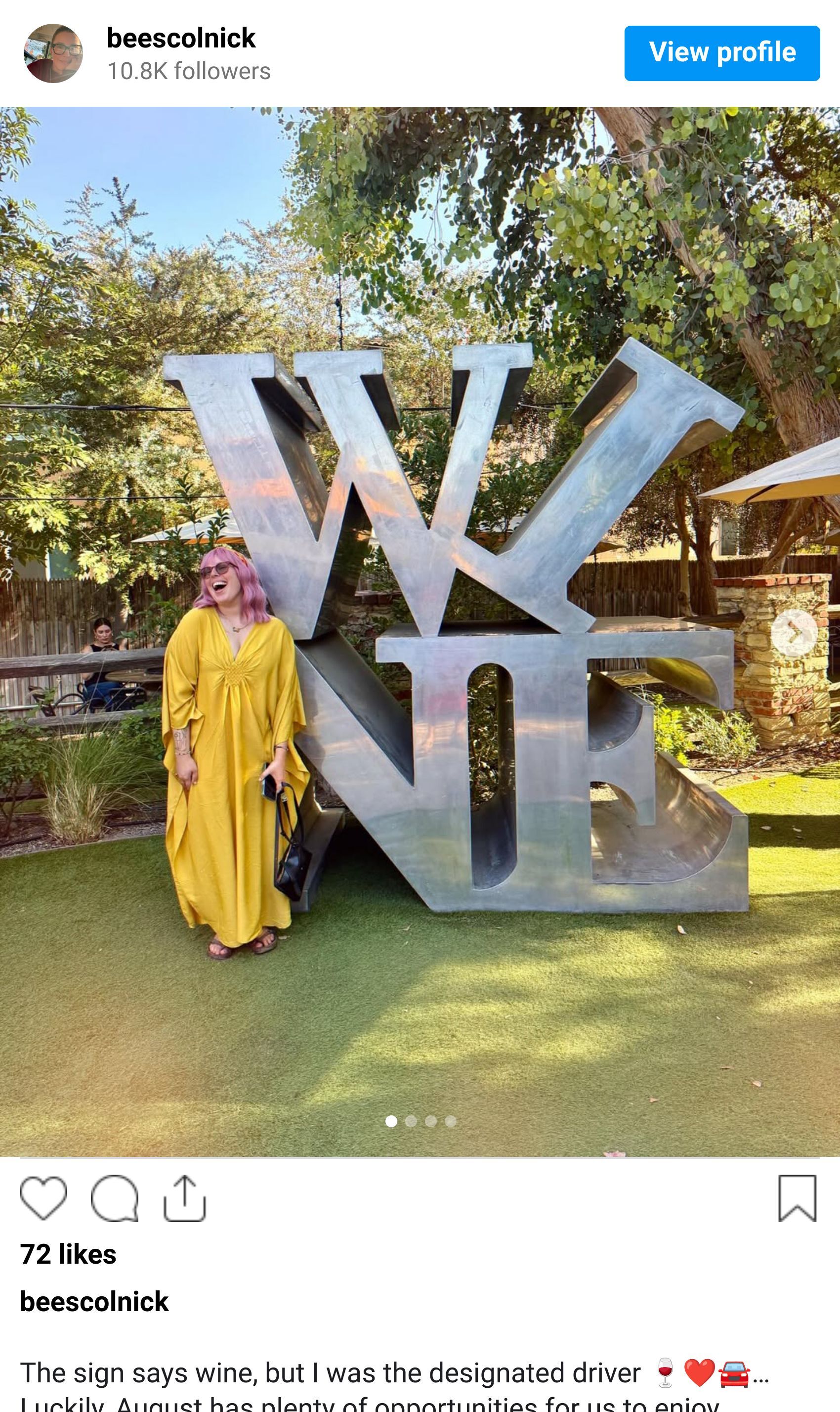
Rebecca ‘Bee’ Scolnick (she/her) is a writer, witch, and weirdo, who wants to help make meaning out of mess. Her books The Witch’s Book of Numbers: Enhance Your Magic With Numerology and Marriage by the Numbers: Planning Your Wedding Using Numerology are out now, and she pens swimming in the soup on Substack. She is also one-third of Call Your Coven: Practical Advice for Nonsensical Times, a new podcast that blends numerology, astrology and the tarot into one monthly forecast. Bee lives in Los Angeles with the loves of her life: her wife and their pup. Follow her @beescolnick on Instagram.
From me, Bee, and (probably) all of Smut Club: Happy Valentine’s Day, ya filthy animals. Go read something hot.
💜Shelly
